
Most people who want to grow in their career or learn something new start with a lot of motivation and very little direction. They watch a few YouTube videos, sign up for a course they found in an advertisement, start reading a book someone recommended, and then slowly realise they are not sure whether any of this is actually taking them somewhere meaningful. The motivation fades. The tabs stay open. The half-finished course collects digital dust. And six months later they are roughly where they started except now they also feel guilty about not finishing what they started.
This is not a motivation problem. It is a direction problem. And the solution is a skill development roadmap.
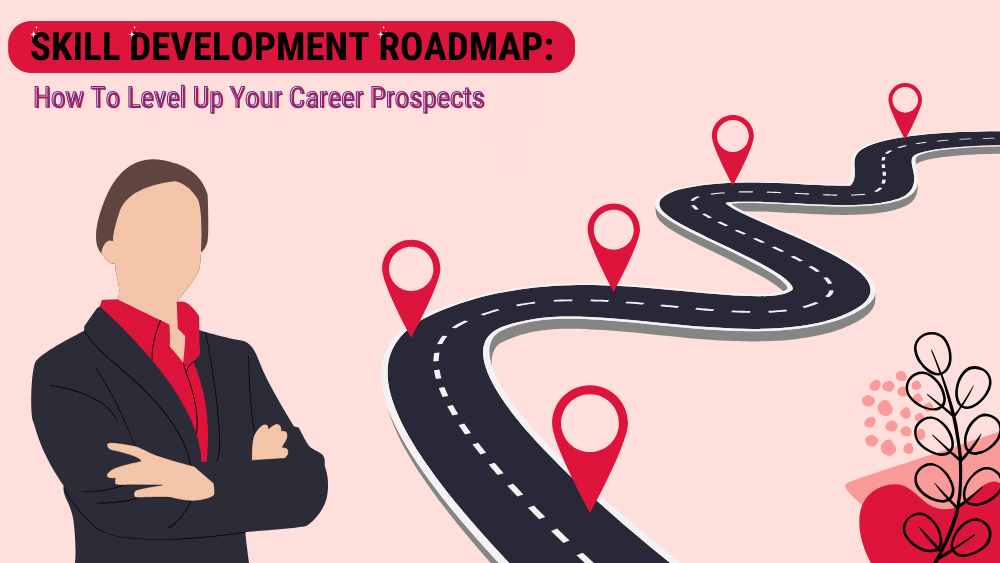
A skill development roadmap is simply a structured plan for building a specific skill or set of skills over a defined period of time. It answers three questions that most learning attempts leave unanswered. Where are you starting from? Where do you want to get to? And what is the most logical path between those two points? With those questions answered clearly, learning stops feeling like a random collection of activities and starts feeling like progress toward something real.
This blog is going to explain what skill development roadmaps are, why they work better than unstructured learning, how to build one that is actually useful for your specific situation, and what the roadmaps look like for some of the most in-demand skill areas right now. By the end you will have both the framework and the practical starting points to build your own.
Why Most People Struggle to Develop Skills Consistently
Before we build the solution, it is worth understanding the problem honestly because most advice about skill development skips this part and goes straight to tips that do not address the root cause.
The first problem is lack of clarity about the destination. If you want to improve your communication skills, what does good look like for you specifically? Being able to speak confidently in team meetings? Writing clearer emails? Presenting to senior stakeholders? These are all communication skills but they require very different learning activities. Without being specific about what you are actually trying to achieve, every learning resource seems relevant and none of them fully satisfies you because none of them was chosen with your specific goal in mind.
The second problem is trying to learn too many things simultaneously. There is always something new to learn and the volume of available content makes it easy to keep adding things to the list without finishing anything. Spreading your attention across five different learning tracks means none of them gets the focused time and practice it needs to produce real improvement. Skill development requires concentration over time, not a wide sampling of many things.
The third problem is the gap between consuming content and actually developing a skill. Watching tutorials and reading articles produces the feeling of learning without always producing the actual capability. Real skill development requires practice, application, feedback, and repetition. A learning plan that is all content consumption and no application does not build skills the way it promises to.
A roadmap addresses all three of these problems by forcing you to define a specific destination, focus on one path at a time, and plan for practice and application rather than just consumption.
What a Skill Development Roadmap Actually Contains
A useful skill development roadmap is not complicated. It does not need to be a twelve-page document or a colour-coded spreadsheet. What it needs is clarity on a small number of essential elements.
The starting point is an honest assessment of where you are now. What do you already know in this area? What can you already do? What gaps are you most aware of? Being honest here rather than modest or overconfident sets the map from the right place. Starting further back than you need to wastes time on content you already know. Starting further forward than you should means building on foundations that are not actually solid.
The destination is a clear description of what competent or proficient looks like in the skill you are developing. Not perfect, not world-class, but the level that will make the meaningful difference you are working toward. Defining this concretely rather than vaguely is important. Instead of “I want to be good at data analysis,” something like “I want to be able to take a raw dataset, clean it, analyse it for patterns, and present findings clearly using visualisations” gives you something specific to measure progress against.
The milestones are intermediate points between your starting position and your destination. Breaking a large skill development goal into smaller stages makes it easier to track progress, maintain motivation, and adjust your approach based on what you learn along the way. Each milestone should feel achievable in a realistic timeframe, typically a few weeks to a couple of months, so that you experience regular progress rather than facing one distant goal that feels permanently out of reach.
The learning resources are the specific courses, books, tutorials, mentors, projects, or practice activities you will use to reach each milestone. The key is being selective. Choose the resources that most directly address the specific gaps at each stage rather than consuming everything available. Too many resources at once creates the same scatteredness that the roadmap is meant to solve.
The practice plan is as important as the learning resources and is the part most often left out. How and when will you practise what you are learning? What real or simulated projects will you work on? Who will give you feedback? Practice without feedback tends to reinforce whatever habits you already have rather than building better ones. Building feedback into your roadmap, whether from a mentor, a peer, or even from self-assessment against defined criteria, accelerates improvement significantly.
Building a Roadmap for Technology Skills
Technology skills are some of the most in-demand professional skills right now and also some of the most structured in terms of available learning paths. Here is how a roadmap for a common technology skill progression might look.
For someone starting in data analytics with no prior experience, the starting point involves developing foundational comfort with spreadsheets and basic data concepts before moving to dedicated analytics tools. Microsoft Excel or Google Sheets at an intermediate level, covering pivot tables, lookup functions, and basic data manipulation, is a realistic first milestone that most people can reach with four to eight weeks of consistent practice.
The second milestone involves learning SQL, which is the language used to query and manipulate data in databases. SQL is not optional for anyone serious about data analytics. Resources like Mode Analytics SQL tutorials, Khan Academy, or Codecademy provide structured introductions. A project milestone might be completing a set of increasingly complex queries on a real dataset.
The third milestone involves learning a visualisation tool. Tableau Public is free and widely used in industry. Power BI from Microsoft is equally relevant for business environments. Building a small portfolio of data visualisation projects using real publicly available datasets demonstrates applied skill in a way that course completion certificates alone cannot.
For someone building programming skills from scratch, a similar milestone structure applies. Starting with the logic of programming through free resources before committing to a specific language, learning one language to a functional level before adding others, building small projects that use what you have learned, and then expanding into more complex applications builds solid foundations progressively rather than creating a superficial familiarity with many things.
Building a Roadmap for Professional and Soft Skills
Professional skills like communication, leadership, problem-solving, and project management are often treated as things you either have or do not have. This is not accurate. They are learnable skills that respond to structured development just as technical skills do, though the learning activities look different.
A roadmap for improving professional communication might start with identifying the specific contexts where you most need to improve. Written communication for reports and proposals, verbal communication in meetings, or presentation skills for larger audiences each require different practice activities.
For written communication, the milestone structure might begin with studying clear writing principles through a resource like the Harvard Business Review writing guides or a book like On Writing Well by William Zinsser. The practice activities involve writing regularly with specific feedback. This might mean asking a trusted colleague to review your written work with honesty about clarity and conciseness, or using structured peer feedback in a professional writing community.
For presentation skills, the milestone structure might begin with recording yourself presenting a short prepared talk, reviewing it with specific criteria in mind, and presenting to progressively larger and less familiar audiences. Toastmasters International clubs exist in most cities in India and provide a structured, supportive environment for exactly this kind of deliberate practice with consistent feedback.
Leadership skills are harder to practise without leadership opportunities, which is why the practice plan for leadership development often needs to be creative. Volunteering to lead a project team, taking on coordination responsibilities in a community organisation, mentoring junior colleagues, and studying leadership case studies actively rather than passively all provide the practice ground that leadership development requires.
Building a Roadmap for Creative Skills
Creative skills like design, writing, photography, and content creation follow similar milestone structures but with an important difference in how progress is measured. In creative fields, the quality and distinctiveness of your work matters as much as your technical proficiency, and developing your own voice and perspective takes time and exposure to a wide range of influences.
A roadmap for someone developing graphic design skills might start with learning the fundamental principles of design, which include concepts like hierarchy, contrast, alignment, and colour theory, before touching any design software. These principles are what separate design that communicates effectively from design that merely looks busy. Resources like the book Thinking with Type or free design fundamentals courses on platforms like Coursera provide this foundation.
The second milestone involves practical proficiency with a primary design tool. Canva is the most accessible starting point for non-professional design. Adobe Illustrator and Figma are the professional standards for graphic design and UI design respectively. Building a set of practice projects that apply the principles you have studied to real or simulated briefs develops the connection between theory and application that produces real skill.
The third milestone involves developing a portfolio of real work. This might mean taking on small projects for local businesses, creating designs for community organisations, contributing to open-source design projects, or setting self-directed briefs that challenge you to work outside your comfort zone.
Staying on Track: The Habits That Make Roadmaps Work
A roadmap is only useful if you follow it, and following it requires habits and commitments rather than just a document sitting in a folder.
Dedicated, regular learning time that is protected in your schedule works far better than trying to learn whenever there happens to be a free moment. Free moments are rare and unpredictable. Scheduled time, even if it is only thirty to sixty minutes three or four days a week, creates the consistency that skill development requires. Consistency over time produces results that intermittent bursts of intense effort rarely match.
Regular progress reviews every two to four weeks give you the opportunity to assess whether your current approach is working and make adjustments before you have lost significant time on something that is not serving you well. Ask yourself honestly at each review whether you are building the skill or just consuming content. Whether the milestones still feel right or need adjusting. Whether the resources you are using are the best ones for where you are now.
Accountability to another person, whether a learning partner, a mentor, or even an online community that shares your learning goals, significantly improves the likelihood that you stay consistent. The social commitment of telling someone what you plan to do and reporting back on progress activates a different kind of motivation than private self-commitment.
Celebrating milestones sounds simple but genuinely matters. Acknowledging when you reach a milestone, in whatever way is meaningful to you, reinforces the sense of progress and momentum that keeps motivation alive over a multi-month learning journey. Skill development is a long game and recognising the stages along the way makes it more sustainable.
Adapting Your Roadmap as You Learn
A good roadmap is not rigid. As you move through it you will learn things about yourself, about the skill, and about your actual goals that will prompt adjustments. Perhaps you discover that one aspect of the skill is more interesting and more relevant to your goals than you initially thought, and you want to go deeper there than the original plan anticipated. Perhaps you discover that a particular resource is not working well for your learning style and you need to substitute something different.
These adjustments are not failures. They are the natural result of learning more about the territory as you travel through it. The roadmap is a guide, not a contract. Updating it based on what you learn is exactly what a good plan should do.
What is worth protecting, even as you adapt, is the overall direction and the habit of regular, consistent practice. The destination may refine. The path may change. But the commitment to moving forward remains.
Conclusion
Skill development roadmaps work because they solve the real problems that most learning efforts fail to address. They provide direction by defining a clear destination. They provide focus by organising learning into a logical sequence rather than a scatter of random activities. They create accountability through milestones and regular reviews. And they ensure that practice and application are built into the plan rather than treated as optional extras.
Building a roadmap for any skill you want to develop is not a complicated or time-consuming exercise. An honest assessment of where you are, a clear definition of where you want to get to, a set of intermediate milestones, the right learning resources for each stage, and a practice plan that you are actually committed to is all you need.
The most important thing is to start with one skill rather than many, to be specific rather than general, and to treat the roadmap as a living document that grows and adapts alongside your learning.
Skills are built one deliberate practice session at a time, over weeks and months of consistent effort. A roadmap makes those sessions add up to something meaningful rather than disappearing into the background noise of a busy life.
Choose your destination. Draw your map. Start walking. The destination you care about is reachable if you approach it with enough clarity, enough focus, and enough patience to stay on the path.