

Introduction
Career path exploration is one of the most important steps in building a successful, fulfilling, and future ready professional life. In today’s rapidly evolving job market — shaped by technology, globalization, automation, and digital transformation — traditional linear career paths are no longer the norm. Instead, individuals have access to a wide range of industries, roles, and flexible work models that require thoughtful exploration before making long term commitments.
Choosing a career without proper exploration can lead to dissatisfaction, stagnation, or frequent job changes. On the other hand, structured career path exploration helps individuals align their interests, skills, personality, and values with market opportunities and growth potential.
Whether you are a student deciding on a field of study, a graduate entering the workforce, a professional considering a career switch, or someone re entering employment, career path exploration provides clarity, confidence, and direction.
This comprehensive guide explores career exploration strategies, self assessment methods, industry research techniques, career testing tools, and future trends shaping career discovery.
Understanding Career Path Exploration
Career path exploration is the process of researching, analyzing, and evaluating different career options before making professional decisions.
It involves understanding personal strengths, interests, and values while also studying job market demand, industry growth, and skill requirements.
Exploration helps individuals make informed, strategic career choices rather than impulsive ones.
Importance of Career Exploration
Provides career clarity and direction.
Reduces risk of job dissatisfaction.
Aligns personal strengths with professional opportunities.
Improves long term job stability.
Supports confident decision making.
Career exploration builds strong professional foundations.
Self Assessment: The First Step
Self assessment is the starting point of career exploration.
It involves understanding who you are before deciding what you want to do.
Assess personality traits, interests, strengths, and values.
Self awareness ensures career alignment.
Identifying Interests and Passions
Interests indicate what motivates you naturally.
Reflect on activities you enjoy.
Identify subjects you are curious about.
Careers aligned with interests create satisfaction.
Evaluating Skills and Strengths
Skills determine career readiness.
Identify technical, creative, and soft skills.
Assess areas of excellence.
Strength driven career paths maximize success.
Understanding Personality Types
Personality influences career suitability.
Some individuals prefer analytical roles.
Others thrive in creative or social environments.
Personality career alignment improves performance and satisfaction.
Identifying Personal Values
Values shape career fulfillment.
Consider income expectations, stability, creativity, flexibility, or social impact.
Values aligned careers enhance motivation.
Exploring Career Fields and Industries
Career exploration requires industry research.
Study sectors such as technology, healthcare, finance, education, marketing, and creative industries.
Analyze growth trends and employment demand.
Industry awareness supports informed decisions.
Researching Job Roles
Understand daily responsibilities of different roles.
Review job descriptions.
Analyze skill requirements.
Research career progression pathways.
Role awareness prevents unrealistic expectations.
Understanding Education & Qualification Requirements
Different careers require different educational pathways.
Research degree requirements, certifications, and training programs.
Plan academic journeys accordingly.
Market Demand & Future Career Trends
Career exploration must consider future demand.
Automation is reshaping industries.
Digital skills are rising in importance.
Sustainability and green jobs are emerging.
Future focused planning ensures career longevity.
Informational Interviews
Informational interviews involve speaking with professionals in desired fields.
Ask about job responsibilities, challenges, and growth opportunities.
Real insights provide career clarity.
Internships & Practical Exposure
Hands on experience supports exploration.
Internships reveal real workplace environments.
Project work builds career understanding.
Experience validates interest.
Job Shadowing Opportunities
Job shadowing allows individuals to observe professionals during workdays.
It provides real time exposure to job realities.
Shadowing reduces career uncertainty.
Career Counseling & Guidance
Career counselors provide expert advice.
They assess aptitude and recommend suitable career paths.
Professional guidance supports informed decision making.
Career Assessment Tests
Psychometric and aptitude tests evaluate interests, strengths, and personality traits.
They provide structured career suggestions.
Assessment tools support exploration scientifically.
Networking for Career Exploration
Networking exposes individuals to career opportunities and industry insights.
Connect with professionals across sectors.
Attend seminars and webinars.
Networking broadens perspective.
Exploring Emerging Career Paths
Modern careers extend beyond traditional roles.
Examples include AI specialists, digital marketers, UX designers, and sustainability consultants.
Exploring emerging roles increases future readiness.
Career Path Exploration for Students
Students should begin exploration early.
Participate in workshops.
Engage in extracurricular activities.
Build foundational skills.
Early exploration reduces confusion.
Career Exploration for Graduates
Graduates should evaluate specialization options.
Explore entry level roles across industries.
Gain internship exposure.
Career Exploration for Working Professionals
Professionals may explore new industries for growth.
Evaluate transferable skills.
Consider reskilling pathways.
Career shifts require structured exploration.
Career Exploration for Career Switchers
Switching careers requires deeper research.
Analyze financial implications.
Assess learning timelines.
Plan gradual transitions.
Balancing Passion and Practicality
Ideal careers align passion with market demand.
Pure passion without opportunity may create instability.
Balanced decision making ensures sustainability.
Overcoming Career Confusion
Career confusion is common.
Break exploration into smaller steps.
Seek mentorship.
Experiment with projects or freelance work.
Clarity develops over time.
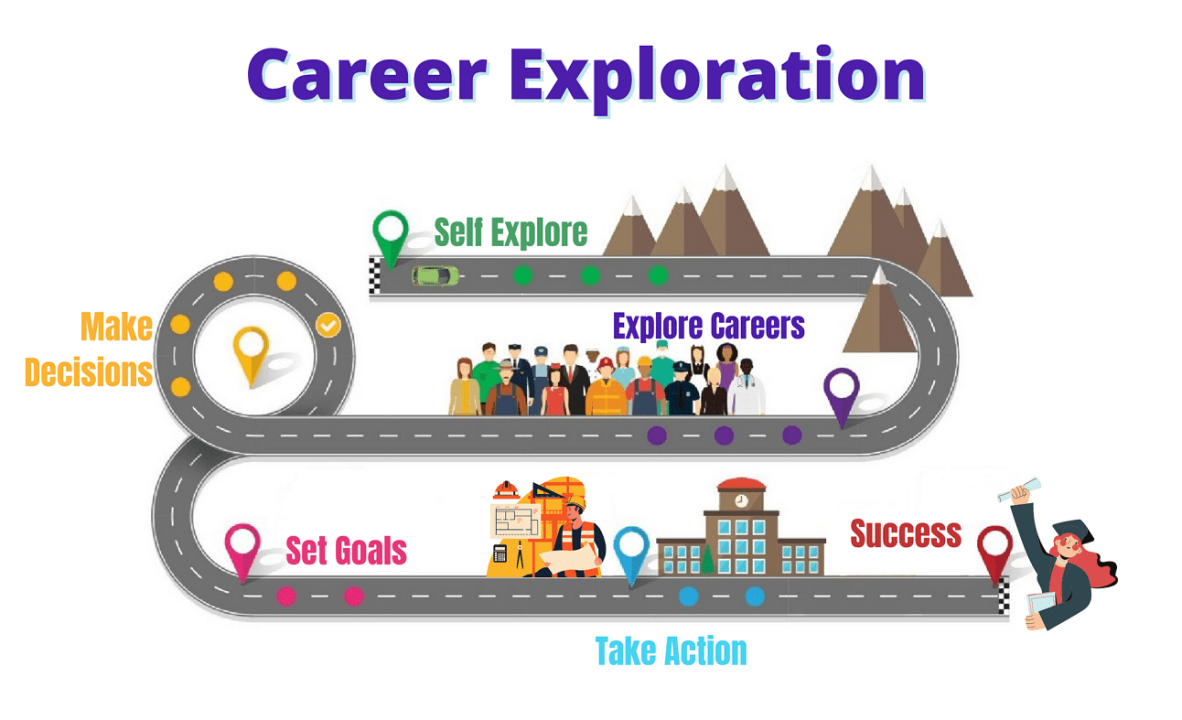
Building a Career Exploration Roadmap
Conduct self assessment.
Research industries.
Gain practical exposure.
Seek mentorship.
Evaluate opportunities.
Structured exploration reduces uncertainty.
Role of Technology in Career Exploration
Online platforms provide career insights.
Virtual internships expand exposure.
AI career guidance tools recommend pathways.
Technology simplifies exploration.
Global Career Exploration Opportunities
Remote work enables international careers.
Cross border industries offer diverse opportunities.
Global awareness expands choices.
Future Trends in Career Path Exploration
Portfolio based hiring will rise.
Multiple career transitions will become normal.
Gig economy careers will expand.
Skill based roles will dominate.
Exploration will become continuous rather than one time.
Measuring Career Fit
Assess job satisfaction.
Evaluate growth opportunities.
Monitor stress and engagement levels.
Fit evaluation supports long term stability.
Career Exploration Mistakes to Avoid
Choosing careers based solely on salary.
Following peer pressure.
Ignoring personal interests.
Skipping research.
Avoiding mistakes ensures better decisions.
Lifelong Career Exploration Mindset
Career exploration is not limited to early life stages.
Professionals must continuously reassess paths.
Learning and exploration remain ongoing.
Conclusion
Career path exploration is a critical process that empowers individuals to make informed, confident, and strategic professional decisions. By understanding personal strengths, interests, values, and aligning them with industry opportunities and future trends, individuals can design careers that offer growth, stability, and fulfillment.
Through self assessment, industry research, internships, networking, and mentorship, career exploration transforms uncertainty into clarity. In a world where job roles evolve rapidly and new opportunities emerge constantly, continuous exploration remains essential.
Your career journey is unique — shaped by your choices, skills, and aspirations. Invest time in exploring possibilities, gaining exposure, and aligning passion with practicality. With structured career path exploration, you can build a purposeful, rewarding, and future ready professional life.